In today’s fast-paced digital world, acronyms like TTY have become a staple in texting and online conversations. But what does TTY mean, and when should you use it? Whether you’re texting friends, chatting on social media, or navigating professional messages, understanding TTY text meaning can help you communicate clearly and avoid misunderstandings. This guide dives deep into the TTY definition, its origins, usage in different contexts, and examples to make you fluent in this messaging abbreviation.
What Does TTY Mean? Definition & Explanation
TTY is a versatile acronym that can mean different things depending on the context. In casual texting, it usually stands for “Talk To You”, a friendly way to end a conversation. Think of it like saying, “I’ll chat with you later”—it’s quick, simple, and casual.
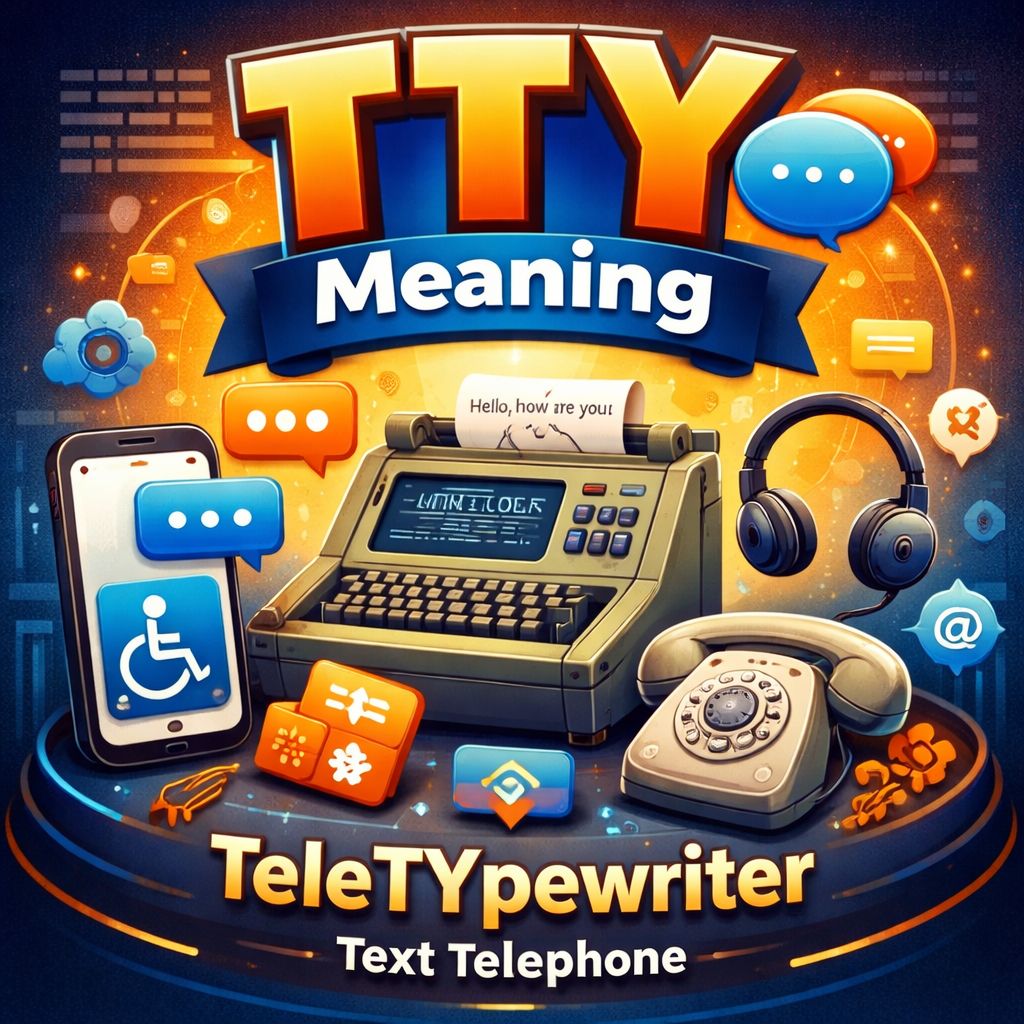
In more formal or technical contexts, TTY refers to Teletypewriter, a device originally used to send typed messages over telephone lines. While the Teletypewriter meaning is largely historical, understanding this origin gives insight into why TTY has a messaging connotation even today.
Examples of TTY in text:
- Friend chat:
“I gotta go now, TTY!” → Translation: “I’ll talk to you later.” - Gaming chat:
“GG, TTY!” → Translation: “Good game, talk to you later.”
Notice how casual, friendly, and brief it is—perfect for quick sign-offs in conversations.
Origin & History of TTY
Understanding TTY texting usage starts with history. The term originated in the mid-20th century as Teletypewriters, which were used to transmit typed messages across telecommunication networks. Initially, TTY was essential for deaf and hard-of-hearing individuals, allowing real-time typed communication via telephone lines.
By the 1980s and 1990s, TTY devices became more widespread in offices and government agencies. Fast forward to the 2000s, the acronym transitioned into online chat culture, evolving into “Talk To You” for casual text messaging.
| Era | TTY Usage | Context |
|---|---|---|
| 1960s | Teletypewriter devices | Communication for deaf/hard-of-hearing |
| 1980s | Office/fax messaging | Professional typed messages |
| 2000s | Online chat | Casual texting sign-off |
| 2020s | SMS & social media | Abbreviation in messaging apps |
This timeline shows how TTY moved from hardware-based communication to digital shorthand in modern texting culture.
How TTY is Used in Texting
The TTY text meaning is all about convenience. People use it in everyday messaging apps like WhatsApp, iMessage, or Facebook Messenger. It’s a quick way to say goodbye without typing a full sentence.
Common texting examples:
- “I’m running late, TTY!” → Friendly sign-off
- “Thanks for the info, TTY soon.” → Polite, casual closure
- “Had a fun chat, TTY!” → Ending a friendly conversation
Key takeaway: TTY texting usage is mostly casual. Unlike TTYL (Talk To You Later), it’s less formal and more immediate.
TTY in Professional Communication
While TTY thrives in casual chats, it has a limited role in professional messaging. Using TTY in emails or corporate messaging can sometimes appear too informal unless you know the recipient well.
Best practices for professional use:
- Use full words like “I’ll talk to you later” in emails
- Use TTY in internal chat platforms if the company culture is informal
- Avoid TTY in client communications or formal letters
Case Study:
- Scenario: A project manager texts her team:
“Meeting ended. TTY!” → Team members understand, but if sent to a client, it may seem unprofessional.
| Context | Appropriate Use of TTY? | Alternative |
|---|---|---|
| Friend chat | ✅ Yes | N/A |
| Team Slack chat | ✅ Usually | “I’ll follow up later” |
| Client email | ❌ No | “I will be in touch later” |
This table highlights when TTY fits and when it’s better to choose full phrasing.
Hidden, Rare, or Offensive Meanings
Although TTY acronym meaning is typically innocent, misunderstandings can happen. Some online users might confuse it with other slang or interpret it differently in niche communities.
Tips to avoid confusion:
- Clarify if unsure: “TTY = Talk To You, right?”
- Avoid using it in contexts where your audience might not know the acronym
- Watch out for similar acronyms in your region
Fortunately, in modern texting culture, TTY rarely carries offensive connotations, making it safe for most casual contexts.
TTY in Online Communities & Dating Apps
TTY texting usage has flourished in online communities like Discord, Reddit, and gaming forums. It’s a quick way to exit a conversation without sounding rude.
In dating apps like Tinder and Bumble, TTY can be a playful, friendly sign-off:
- “Had a great chat tonight, TTY!” → Ends conversation on a positive note
- “Going offline, TTY tomorrow 😄” → Sets expectations for next contact
Observation: On platforms where speedy replies are common, TTY helps maintain flow without long explanations. It’s subtle yet effective.
Similar Terms & Acronyms
If you’re learning texting slang definitions, it’s important to compare TTY with related terms:
| Acronym | Meaning | Tone | Usage Example |
|---|---|---|---|
| TTYL | Talk To You Later | Casual | “Got dinner, TTYL” |
| BRB | Be Right Back | Neutral | “BRB, grabbing coffee” |
| GTG | Got To Go | Casual | “Dinner time, GTG” |
| TTFN | Ta Ta For Now | Playful | “TTFN, see you soon” |
Note: TTY is more immediate and friendly than TTYL, which suggests a longer pause before reconnecting. Understanding these nuances helps you communicate naturally.
10 Popular Slang Terms & Acronyms Containing TTY
Here’s a list of other messaging abbreviations featuring TTY:
- TTYSM – Talk To You So Much (playful)
- TTYS – Talk To You Soon (common texting sign-off)
- TTYL – Talk To You Later (slightly longer break)
- TTFN – Ta Ta For Now (playful, old-fashioned)
- TTYVM – Talk To You Very Much (rare, humorous)
- BTTY – Back To Talk To You (used in gaming)
- HTTY – Happy To Talk To You (friendly)
- TTYSN – Talk To You Soon, Night (used at bedtime)
- TTY2U – Talk To You Too (response to TTY)
- TTYL8R – Talk To You Later (modern texting variation)
Each variation has slightly different nuance, making it important to choose the right one for context.
How to Respond to TTY in Texts
Responding to TTY is simple. Since it’s a friendly sign-off, your reply can mirror its tone:
- Option 1: TTY! → Quick return
- Option 2: TTYL → Slightly longer sign-off
- Option 3: Talk soon! → Polished, conversational
- Option 4: 😄 TTY! → Casual with emoji
ro tip: Match the tone of the sender. If they use casual slang, respond casually. If they use TTY in a professional chat, respond with a full phrase instead of an acronym.
Regional & Cultural Variations
TTY meaning in text can differ slightly depending on the region:
| Region | Common Use | Notes |
|---|---|---|
| USA & Canada | Talk To You | Standard casual sign-off |
| UK & Australia | TTY | Less common; TTYL more frequent |
| Gaming Communities | TTYS / TTY | Widely used across English-speaking gamers |
| Older Generations | Teletypewriter | Historical context recognized |
Cultural differences can also affect perceptions of formality, so it’s wise to adapt TTY usage depending on your audience.
FAQs About TTY
Q: Is TTY still widely used today?
A: Yes, especially in texting, social media, and casual messaging. It’s less common in emails but still recognized.
Q: Can TTY have different meanings?
A: Absolutely. In casual texting, it’s “Talk To You,” but historically, it means Teletypewriter. Context is key.
Q: How is TTY different from TTYL?
A: TTY is a friendly immediate sign-off. TTYL suggests a longer pause before reconnecting.
Q: Should I use TTY professionally?
A: Only in informal corporate chats. In emails or formal communication, use full phrases like “I’ll talk to you later.”
Conclusion
TTY meaning in text has evolved from a technical device abbreviation to a friendly, casual texting sign-off. Its versatility allows you to end conversations smoothly, whether chatting with friends, participating in online communities, or gaming. Understanding the nuances of TTY—its historical roots, modern usage, and variations—helps you communicate clearly and naturally.
Remember: context matters. Use TTY for casual chats, TTYL for longer breaks, and always adapt to your audience. With these insights, you’re ready to navigate modern texting culture like a pro, avoiding misunderstandings and keeping conversations flowing effortlessly.