
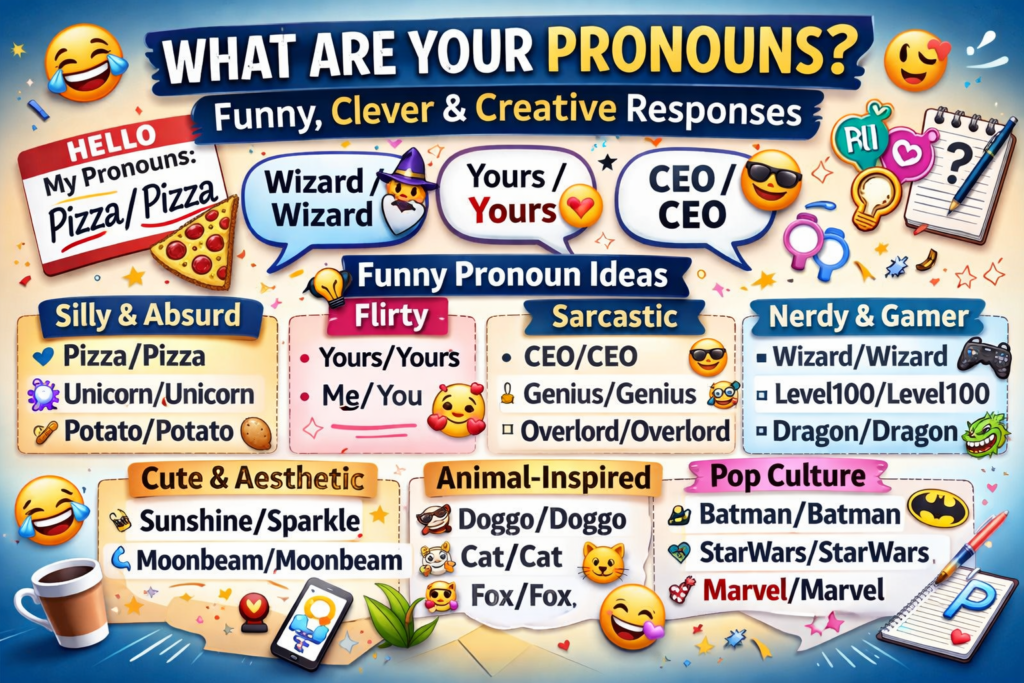
Pronouns are a small but powerful part of language. They tell others how to refer to you, reflect your identity, and show respect in communication. Over the years, a trend has emerged where people respond to “What are your pronouns?” with humor rather than the usual he/him, she/her, or they/them. This article dives deep into funny responses to what are your pronouns, offering creative ideas, practical guidance, and examples that are funny, clever, and even meme-worthy.
Quick Answer: What Are Pronouns and Why They Matter
Pronouns are words that replace a person’s name in conversation. Examples include:
- He/Him
- She/Her
- They/Them
The purpose of sharing pronouns is simple: it ensures people are addressed correctly, fosters inclusivity, and avoids making assumptions based on appearance or voice.
Recently, social media and pop culture have added a humorous twist to this question. People now respond with funny pronoun responses, turning a simple identity question into a playful, creative exchange. These responses are meant to entertain, break the ice, or reflect personality in a lighthearted way.
Why People Use Funny Pronoun Responses
Humor is a universal tool for connection. Here’s why it works so well with pronouns:
- Social Media Influence Platforms like TikTok, Instagram, and Discord encourage playful interaction. Meme culture makes hilarious pronoun comebacks shareable and relatable.
- Breaking Awkwardness The question “What are your pronouns?” can feel formal or tense in casual settings. A funny reply lightens the mood.
- Self-Expression Creative pronoun replies allow people to showcase personality, interests, or humor in a short, memorable way.
For instance, someone might reply with “Pizza/Pizza” or “Wizard/Wizard” to display absurd humor or fandom pride. Viral posts like these often encourage others to explore funny pronoun jokes and playful pronoun responses online.
How Funny Pronoun Replies Differ by Platform
The platform you’re on can shape the type of funny replies pronouns question you use.
| Platform | Style of Funny Response | Notes |
|---|---|---|
| Visual memes, aesthetic pronouns | Short, cute, or trendy formats perform best | |
| TikTok | Quick, punchy video-based replies | Humor often tied to sound effects or trends |
| Discord | Casual, nerdy, or absurd | Perfect for gaming communities or inside jokes |
| Snapchat | Short, playful, in-chat humor | Works best among close friends |
| Professional caution advised | Stick to clever or witty, avoid absurdity |
On casual social media, you can go wild with creative pronoun replies, but in professional settings, humor should be more subtle.
When Humor Works and When It Doesn’t
Knowing when to use funny pronoun responses is crucial. Humor isn’t always appropriate.
✔ Use Funny Responses When:
- You’re interacting with friends, online communities, or meme-savvy groups.
- Gaming, fandom, or pop culture contexts are involved.
- Your humor is clear, respectful, and inclusive.
✘ Avoid Funny Responses When:
- Meeting someone for the first time in a professional or formal setting.
- Speaking to people who may not understand pronoun humor.
- There’s a risk of making someone feel their identity isn’t taken seriously.
Pro Tip: Funny pronouns work best when they add personality, not confusion. For example, “Cat/Cat” in a casual chat is fun, but in a workplace bio, stick to clarity.
Top Categories of Funny Pronoun Responses
Let’s explore the most popular types of funny pronoun responses. Each category offers examples, style tips, and use cases.
😂 Silly & Absurd Replies
Absurdity thrives online. Silly responses are memorable and can be shared as memes.
Examples:
- Pizza/Pizza
- Unicorn/Unicorn
- Potato/Potato
- Meow/Meow
Why it works: The unexpected, absurd nature creates humor while remaining harmless. People love sharing these in chats, social media bios, and gaming platforms.
😏 Flirty Responses
Flirty replies combine charm with humor. They work best in casual interactions or online dating.
Examples:
- Yours/Yours
- Me/You
- Swipe Right/Swipe Right
Tips: Use sparingly and only with someone you know well. Flirty clever pronouns answers can break the ice but may confuse strangers.
😎 Sarcastic & Witty Replies
Sarcasm is a popular tool for witty pronoun comebacks. It’s clever, memorable, and often relatable.
Examples:
- CEO/CEO
- Overlord/Overlord
- Genius/Genius
- Manager/Manager
Use Case: Sarcastic responses are ideal for friends, Discord servers, or meme-based chats where humor is appreciated.
🧙♂️ Nerdy & Gamer Replies
Fandoms and gaming communities embrace creative pronouns to identify as characters, items, or powers.
Examples:
- Wizard/Wizard
- Level100/Level100
- Dragon/Dragon
- Pixel/Pixel
Why it works: Nerdy replies connect humor with shared interests, strengthening online community bonds.
💫 Cute & Aesthetic Replies
Aesthetic replies often rely on softness, whimsy, or visual appeal. Perfect for Instagram or Tumblr bios.
Examples:
- Sunshine/Sparkle
- Moonbeam/Moonbeam
- Star/Star
- Cloud/Cloud
Tip: These add charm while staying approachable. They often align with humorous pronouns bio ideas and creative pronoun trends.
🐶 Animal-Inspired Pronouns
Animal pronouns bring a playful and light hearted vibe. They’re widely popular on social media.
Examples:
- Doggo/Doggo
- Cat/Cat
- Fox/Fox
- Bunny/Bunny
Fun Fact: Animal pronouns often appear in meme content, making them meme-inspired pronoun replies that go viral easily.
How to Respond to Someone Else’s Funny Pronouns
Being on the receiving end of humor can be tricky. Here’s how to respond respectfully:
- Acknowledge the joke: “Nice! I like that one.”
- Match the tone: If they’re absurd, respond absurdly; if flirty, keep it playful.
- Avoid mocking: Never make someone feel their humor is wrong.
Example Responses:
- “Wizard/Wizard? That’s epic!”
- “Pizza/Pizza works for me.”
- “Me/You… smooth, I see what you did there.”
Regional & Cultural Differences
Humor doesn’t translate everywhere. Casual pronoun humor can vary globally:
- US/UK: Meme-based absurdity is common.
- Asia: Cute or playful pronouns dominate over sarcastic or flirty ones.
- Middle East & conservative regions: Formality is often prioritized, absurd humor may confuse.
Pro Tip: Always gauge the audience. Even viral trendy pronoun jokes may not land across cultures.
FAQ About Funny Pronoun Responses
Can I use funny pronouns at work?
- Only if your workplace culture is casual. Otherwise, stick to standard pronouns.
Are some funny pronouns offensive?
- Yes, avoid replies that reference religion, politics, or sensitive topics. Keep humor lighthearted.
How do I introduce funny pronouns without confusion?
- Add a small disclaimer, e.g., “My pronouns: Pizza/Pizza (just for fun!).”
Are animal pronouns widely accepted?
- Generally yes, especially in social media, gaming, and casual online chats.
Conclusion
Funny pronouns have transformed a simple question into a playground of creativity, humor, and personality. From hilarious pronoun comebacks to creative pronoun replies, the trend shows how language evolves with culture, humor, and community.
When used appropriately:
- Funny responses break the ice.
- Clever pronouns answers foster engagement online.
- Meme-inspired pronoun replies can go viral and spark conversation.
Remember: humor is context-sensitive. Use funny pronoun responses with awareness, respect, and creativity. And most importantly, have fun with it!
This guide covers everything from humorous replies pronoun questions, playful pronoun responses, and sarcastic pronoun answers to platform-specific examples, cultural insights, and etiquette tips. Whether you want silly, nerdy, aesthetic, or flirty funny pronouns for social media, you now have the ultimate reference.