
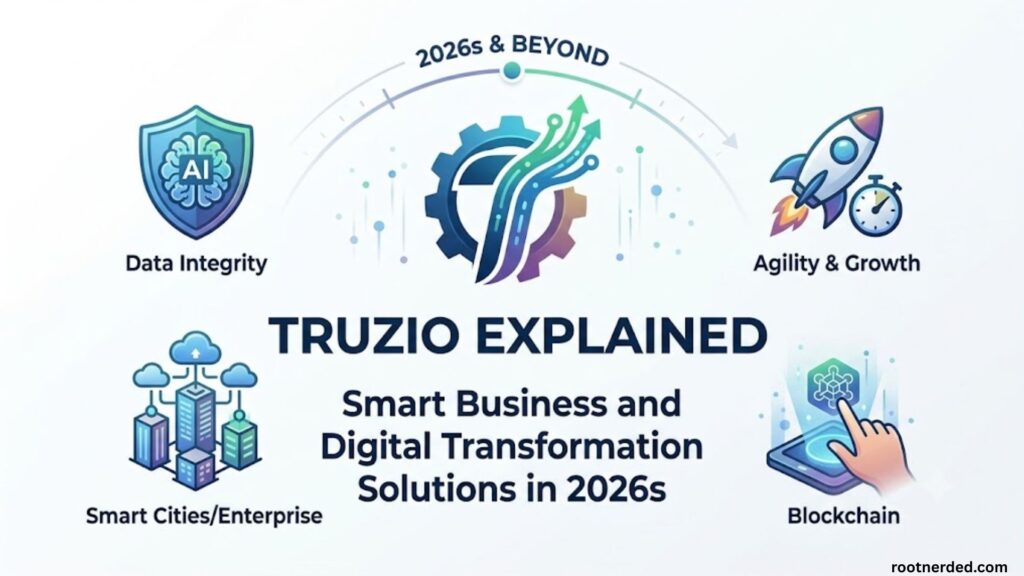
Truzio Explained in 2026 – Why This Platform Matters Now
Digital business no longer runs on simple software tools. You now deal with fast markets, live data, and nonstop competition. This is where Truzio becomes relevant as a smart digital transformation approach.
In 2026, companies do not just want automation. They want connected intelligence across every department. Truzio represents this shift. It brings data, workflows, and decision systems into one structured environment.
However, the real value comes from how it aligns business goals with technology execution. You do not just digitize tasks. You reshape how the business thinks and operates.
What Is Truzio in Digital Transformation?
Truzio as a Unified Transformation Platform
Truzio works as a digital transformation ecosystem rather than a single tool. It connects business processes, analytics, automation, and cloud systems into one flow.
Think of it like a central nervous system for your organization. Every department feeds data into it. Every system receives instructions back.
Key idea:
- You stop using disconnected tools
- You start using a unified operational layer
Core Purpose of Truzio
The main purpose of Truzio is simple but powerful:
- Unify business operations
- Automate repetitive processes
- Turn raw data into actionable insight
What Truzio Is Not
It is important to clear confusion here.
Truzio is not:
- Just a CRM tool
- Just a cloud dashboard
- Just an analytics app
Instead, it acts as a multi-layer enterprise system that connects all of them.
How Truzio Works : Core Architecture Breakdown
Layered Structure of Truzio
Truzio follows a layered model. Each layer handles a specific function.
| Layer | Function | Business Impact |
|---|---|---|
| Data Layer | Collects and organizes data | Clean information flow |
| Process Layer | Automates workflows | Faster operations |
| Intelligence Layer | AI and analytics | Better decisions |
| Integration Layer | Connects systems | Unified ecosystem |
Data Layer : The Foundation
This layer gathers data from:
- ERP systems
- CRM platforms
- IoT devices
- Internal databases
It removes duplication and builds a single source of truth.
Process Layer : Automation Engine
Here Truzio automates tasks like:
- Invoice processing
- Customer onboarding
- Inventory updates
For example, when a customer places an order, the system updates inventory and triggers delivery automatically.
Intelligence Layer : Decision Support
This layer uses analytics and AI to:
- Predict customer behavior
- Detect operational risks
- Suggest business actions
Integration Layer : System Connectivity
Truzio connects external systems through APIs. This avoids data silos and improves collaboration across platforms.
Core Capabilities of Truzio for Smart Business Operations
Business Process Automation
Truzio reduces manual tasks by automating workflows. Companies often reduce process time by 20% to 40% when automation is fully deployed.
Real-Time Analytics
You get live dashboards that track:
- Sales performance
- Operational efficiency
- Customer engagement
Cloud-Based Scalability
Truzio uses cloud infrastructure so businesses can:
- Scale operations quickly
- Handle peak traffic
- Reduce infrastructure costs
Customer Experience Optimization
It tracks customer behavior and helps personalize:
- Recommendations
- Communication
- Support responses
Enterprise Integration
Truzio connects legacy systems with modern tools. This prevents full system replacement costs.
Technologies That Power Truzio Systems
Artificial Intelligence and Machine Learning
AI helps Truzio:
- Forecast demand
- Optimize workflows
- Reduce inefficiencies
Cloud Computing
Cloud systems provide:
- Flexibility
- Remote access
- Cost efficiency
IoT Connectivity
IoT integration allows real-time tracking in industries like:
- Manufacturing
- Logistics
- Energy systems
Cybersecurity Frameworks
Security includes:
- Encryption
- Identity management
- Threat detection systems
Why Digital Transformation Matters More in 2026
Rising Market Pressure
Companies face faster competition cycles. Products evolve in months, not years.
Demand for Real-Time Decisions
Businesses now expect instant insights instead of monthly reports.
Data Explosion
Global data volume continues to grow rapidly. Without platforms like Truzio, data becomes unmanageable.
Automation Necessity
Manual operations cannot scale. Automation becomes essential, not optional.
Business Benefits of Truzio-Style Solutions
Efficiency Gains
Businesses often see:
- 25% faster workflows
- Reduced manual errors
- Improved coordination
Faster Decision Making
Real-time dashboards reduce decision delays.
Cost Reduction
Automation reduces labor-intensive tasks.
Better Customer Experience
Customers get faster responses and personalized interactions.
Business Agility
Companies adapt quickly to market changes.
Industry Applications of Truzio
Healthcare
- Patient record automation
- Appointment optimization
- Predictive diagnostics
Financial Services
- Fraud detection
- Risk analysis
- Automated compliance
Retail and E-Commerce
- Personalized recommendations
- Inventory prediction
- Customer segmentation
Manufacturing
- Predictive maintenance
- Smart factory systems
- Production tracking
Logistics
- Route optimization
- Shipment tracking
- Supply chain visibility
Case Study : Digital Transformation Using a Truzio Model
A mid-size retail company struggled with inventory mismatches and slow reporting.
Before:
- Manual stock updates
- Delayed reporting
- High operational waste
After implementation:
- Inventory updates became real-time
- Reporting time dropped by 60%
- Stock accuracy improved significantly
Key Result:
The company improved order fulfillment speed by 32% within six months.
Challenges in Digital Transformation Projects
Legacy Systems
Old systems slow down integration and create technical debt.
Employee Resistance
Workers may resist new tools due to fear or lack of training.
Data Security Risks
More digital systems increase exposure to cyber threats.
Best Practices for Implementation
Start With Clear Goals
Define measurable outcomes before adoption.
Focus on High-Impact Areas First
Do not try to transform everything at once.
Train Employees Early
Training improves adoption rates significantly.
Monitor Performance Continuously
Track KPIs such as:
- Process speed
- Cost savings
- User adoption
Is Truzio Right for Your Organization?
Ask yourself:
- Do you struggle with disconnected systems?
- Do you rely heavily on manual processes?
- Do you need faster insights?
If yes, a Truzio-style platform fits well.
However, smaller businesses should evaluate cost versus complexity before adoption.
Digital Transformation Trends Shaping 2026
AI-Driven Operations
AI now runs core business decisions in many enterprises.
Hyperautomation
Businesses combine AI, RPA, and analytics for full automation.
Low-Code Platforms
Teams build applications faster without deep coding skills.
Real-Time Data Systems
Instant insights replace traditional reporting cycles.
Security and Governance in Truzio Systems
Security plays a central role in modern platforms.
Key areas include:
- Data encryption
- Identity control
- Compliance monitoring
- Threat detection
Strong governance ensures data stays accurate and secure.
Limitations of Truzio-Style Platforms
Even powerful systems have limits:
- High initial setup effort
- Dependence on data quality
- Integration challenges with outdated tools
- Ongoing optimization needs
Future of Smart Business Platforms Beyond 2026
The next stage of platforms like Truzio includes:
- Fully autonomous decision systems
- Self-healing workflows
- Industry-specific AI ecosystems
- Deeper predictive intelligence
Businesses will shift from managing tools to managing outcomes.
Final Thoughts on Truzio and Smart Transformation
Truzio represents a broader shift in how businesses operate. It moves companies from fragmented systems to unified intelligence.
You do not just digitize operations. You reshape how decisions happen.
In 2026, success depends on speed, clarity, and automation. Platforms like Truzio help businesses reach that level by connecting data, people, and processes into one intelligent system.